I. International Experts Gather in Shenzhen to Discuss Strawberry Science and the Development of Future Agriculture
From September 18 to 20, the 2nd International Conference on Frontiers of Strawberry Research was successfully held at Shenzhen University of Advanced Technology (SUAT). The conference brought together experts from universities, research institutes and industry from multiple countries and regions, including China, the United States, Finland, Spain and Japan. Focusing on key areas such as strawberry genetic and developmental mechanisms, frontier biotechnology, fruit quality regulation, germplasm resource innovation, smart controlled-environment agriculture and future breeding systems, participants engaged in systematic, in-depth academic exchanges and jointly explored new pathways for frontier innovation in plant science and the high-quality development of future agriculture.
The conference was hosted by SUAT's Faculty of Synthetic Biology and Institute of Emerging Agricultural Technology. Building on the international exchange platform established by the first conference, it continued to deepen exchanges and further promoted the in-depth integration of basic strawberry research, technological innovation and agricultural application in China and abroad. The conference was led by Conference Chair Professor Liu Zhongchi, whose research group took charge of overall coordination throughout—from inviting experts from China and overseas and designing the academic program to organizing the poster session and coordinating all conference logistics.
II. Opening Remarks: Bringing Together the Strength of Interdisciplinary Innovation and Opening a New Chapter of Exchange on Future Agriculture
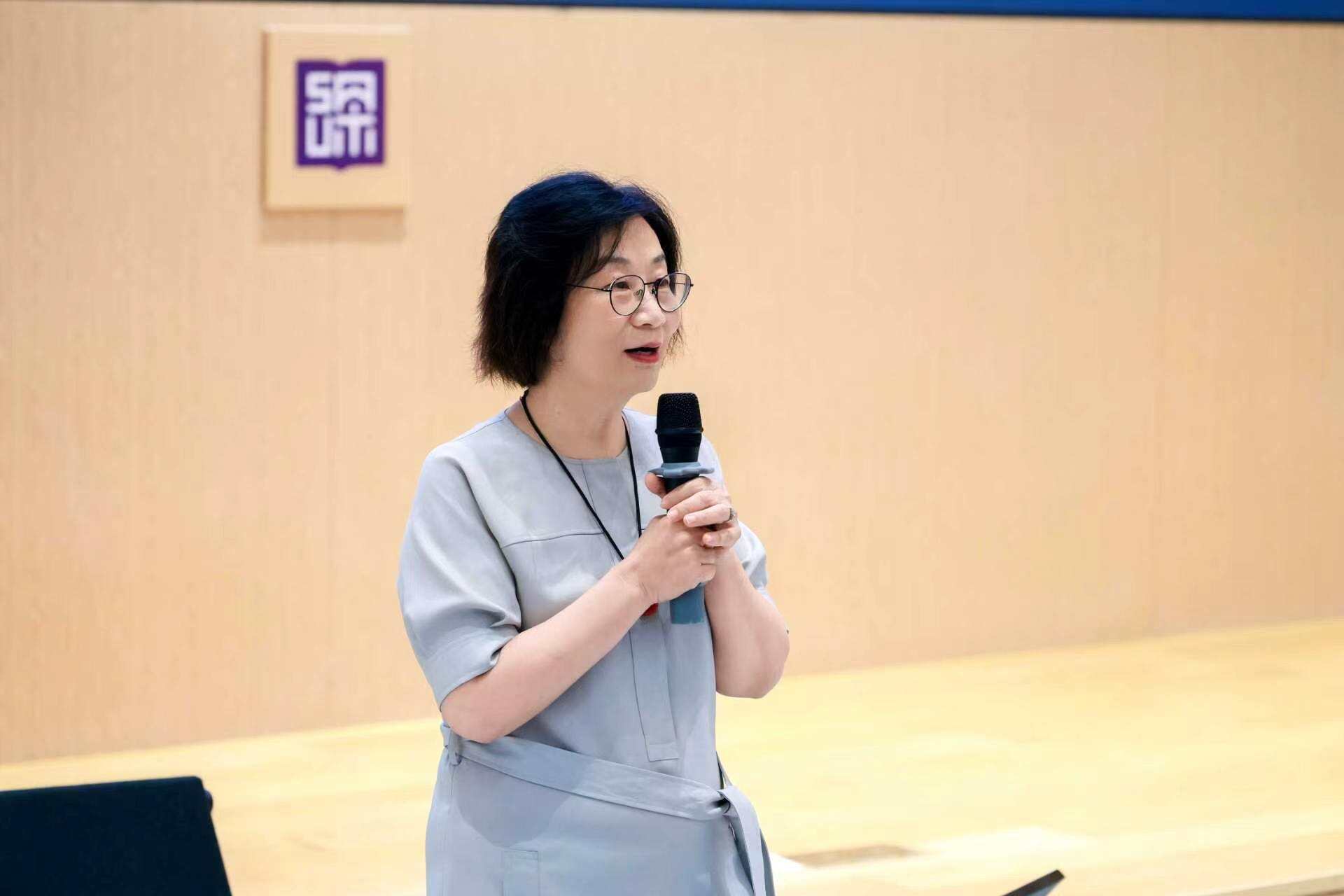
At the opening ceremony, Professor Zhang Xian-En, Dean of the Faculty of Synthetic Biology, delivered a welcome address, extending a warm welcome to the experts and scholars from China and abroad and explaining the significance of the conference.
Professor Zhang Xian-En said that the 2nd International Conference on Frontiers of Strawberry Research builds on the solid foundation laid by the first conference as a further deepened and upgraded edition. Focusing on frontier areas including strawberry germplasm resource exploration, precision breeding innovation, fruit development regulation, spatiotemporal omics analysis, and ripening mechanisms and postharvest preservation, the conference builds a bridge for collaborative innovation among industry, academia and research institutions, helping to resolve challenges in basic strawberry research and pain points in industrial development. He noted that Shenzhen has a vibrant innovation environment and abundant momentum in science and technology innovation. Positioned as a new-type research university, SUAT adheres to interdisciplinary integration and industry–academia–research collaborative innovation, and continues to promote cross-disciplinary empowerment among synthetic biology, life sciences and future agriculture. He expressed the hope that the conference would serve as an opportunity to deepen global academic exchange and research cooperation, jointly helping to improve the quality and efficiency of strawberry research and empowering the innovative development of future agriculture.
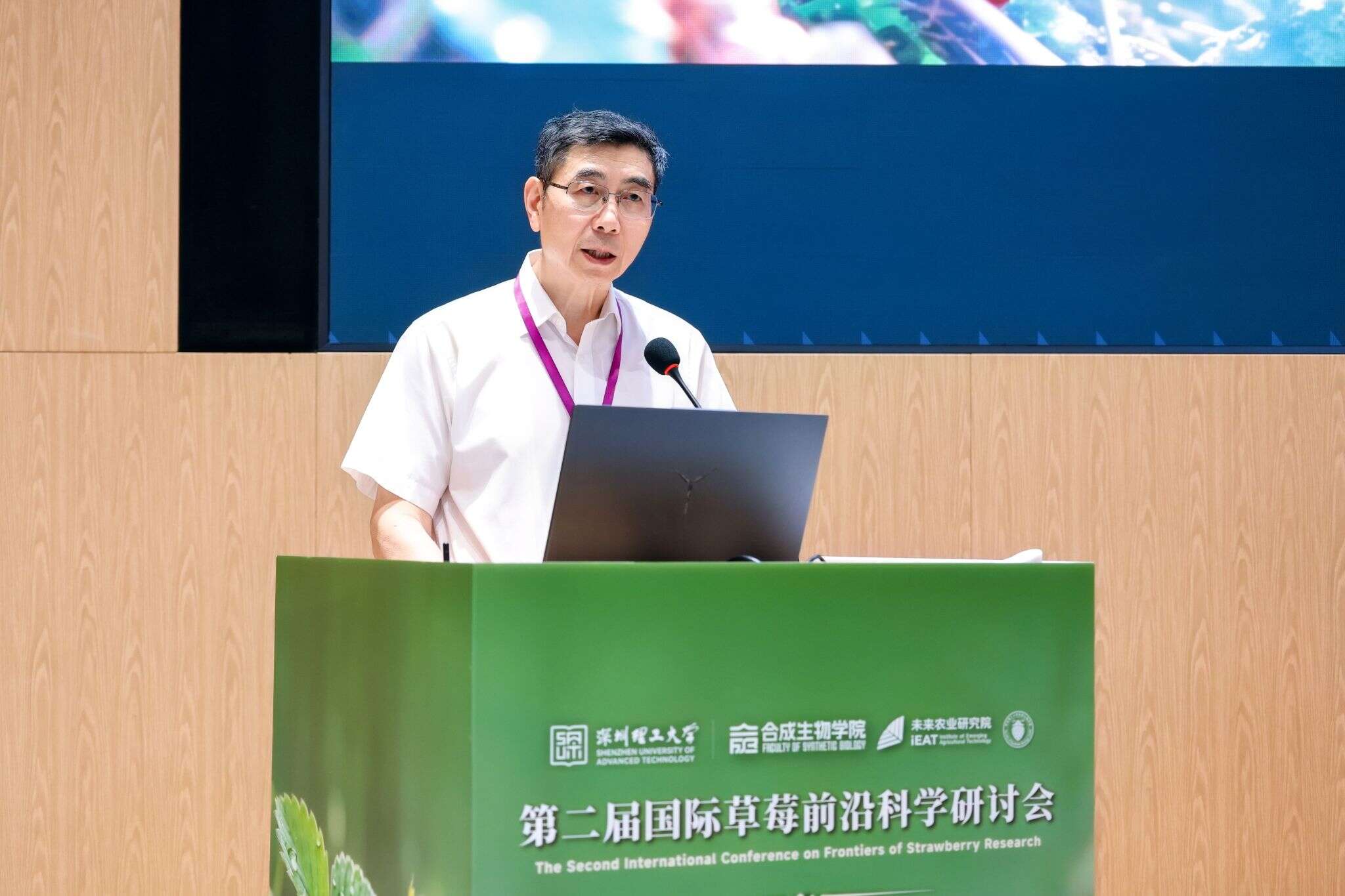
Professor Yang Zhenbiao, Director of the Institute of Emerging Agricultural Technology, then delivered remarks. He introduced the development plans of the University and the Institute in agricultural science and technology innovation and interdisciplinary integration, and stated that innovation in future agriculture depends on breakthroughs in basic research and empowerment by frontier technologies. He looked forward to leveraging this international academic platform to pool global wisdom and strength, promote the in-depth integration of basic strawberry research, synthetic biotechnology and modern agricultural technology, and open up new ideas and explore new pathways for the innovative development of future agriculture.
III. Thematic Sessions: Focusing on the Frontiers of Strawberry Research and Exploring New Directions in Life Sciences
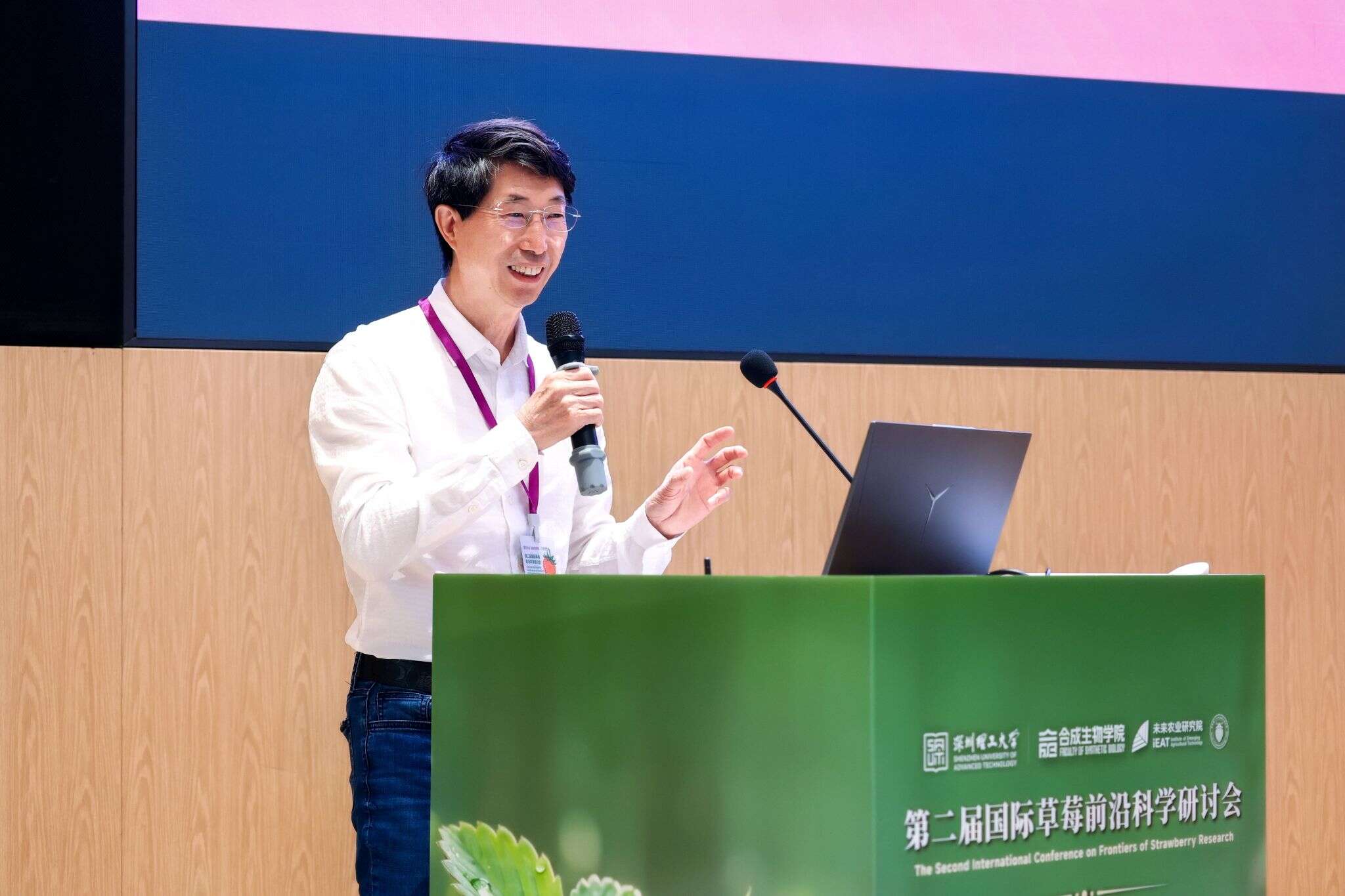
The conference featured five thematic presentation sessions, holding in-depth academic discussions on five core areas—strawberry genetics and development, frontier technological innovation, regulation of quality and disease resistance, germplasm, breeding and evolution, and smart controlled-environment cultivation—to explore, from multiple perspectives, new breakthroughs in basic strawberry research and new pathways for the development of future agriculture.
Session 1: Genetic and Developmental Mechanisms
This session focused on the genetic mechanisms underlying core agronomic traits of strawberry and the mechanisms regulating its growth and development, delving into basic research on strawberry growth and development. Professor Timo Hytönen of the University of Helsinki, Finland; Dr. Chen Maoxian of the Kunming Institute of Botany, Chinese Academy of Sciences; Professor Kang Chunying of Huazhong Agricultural University; and Professor Guo Lei of Shandong Agricultural University shared their work on key topics including the mechanisms of high yield in strawberry, the regulation of flowering and fruit development, the CLV-WUS developmental regulatory module, and the mechanisms of asexual reproduction in woodland strawberry, respectively.
From multiple levels, including genome analysis, molecular regulatory networks and developmental biology, these studies revealed the regulatory principles underlying complex life processes in strawberry, providing a theoretical basis for future precision breeding and trait improvement. The session was chaired by Professor Li Bingbing of China Agricultural University.
Session 2: Frontier Technologies: Transformation, CRISPR and Single-Cell Genomics
This session focused on the innovative implementation and application breakthroughs of frontier technologies—such as gene editing, single-cell omics, multi-omics databases and precision detection—in strawberry research. Professor Lian Hongli of Shanghai Jiao Tong University; Assistant Research Professor Li Shuangtao of the Beijing Academy of Agriculture and Forestry Sciences; Professor Zhou Junhui of the Peking University Institute of Advanced Agricultural Sciences; Professor Huang Yun of Beijing University of Agriculture; Dr. Mei Yan of Bio-Rad Laboratories; and Dr. Li Muzi of the Shenzhen Institutes of Advanced Technology, Chinese Academy of Sciences, delivered thematic presentations in turn.
The experts exchanged frontier findings on plant hormone regulation, single-cell transcriptome analysis, biosensor applications, digital PCR detection and the construction of multi-omics resources, fully demonstrating the new trend of emerging biotechnologies driving basic strawberry research to become increasingly precise, systematic and efficient through continuous iteration. The session was chaired by Professor Kang Chunying of Huazhong Agricultural University.
Session 3: Fruit Quality, Postharvest and Disease Resistance
Addressing core pain points in the development of the strawberry industry, this session focused on key scientific and applied issues such as the development of fruit quality, regulation of postharvest preservation, and enhancement of disease resistance. Dr. Iraida Amaya, Tenured Scientist at the Institute for Mediterranean and Subtropical Horticulture “La Mayora”, Spain; Professor Wang Wei of Peking University; Professor Li Bingbing of China Agricultural University; Assistant Research Professor Chen Yanpei of Zhejiang University; Professor Li He of Shenyang Agricultural University; Professor Shi Yanna of Zhejiang University; and Research Professor Gao Qinghua of the Shanghai Academy of Agricultural Sciences held in-depth discussions on these issues.
The presentations covered core topics including the mechanisms of strawberry aroma biosynthesis, circadian clock regulatory networks, coordinated improvement of quality and resistance, cold-chain logistics and preservation, mechanisms of resistance to gray mold, and precise regulation of fruit ripening, effectively promoting closer integration and bidirectional knowledge transfer between basic strawberry research findings and agricultural production applications. The session was co-chaired by Research Professor Zhou Junhui of the Peking University Institute of Advanced Agricultural Sciences and Professor Lian Hongli of Shanghai Jiao Tong University.
Session 4: Breeding, Germplasm Resources and Evolution
This session focused on the exploration and utilization of strawberry germplasm resources, the analysis of species evolution patterns and the development of efficient molecular breeding systems, supporting the innovative breeding of new strawberry varieties. Professor Aaron Liston of Oregon State University, USA; Research Professor Qiao Yushan of the Jiangsu Academy of Agricultural Sciences; Professor Qiao Qin of Yunnan Agricultural University; Professor Fan Zhen of Zhejiang A&F University (online); Professor Xue Li of Shenyang Agricultural University; and Associate Researcher Wang Kai of SUAT shared their latest research findings.
The experts focused on frontier topics including the mechanisms of strawberry species evolution, the screening and evaluation of elite germplasm resources, the mining of key functional genes, the establishment of an Asian strawberry breeding platform, and the application of synthetic biology in crop breeding, providing new ideas and technical support for strawberry breeding by design, new variety development and innovative crop R&D. The session was co-chaired by Associate Researcher Wang Kai and Research Shi Yanna of Zhejiang University.
Session 5: Smart Vertical Farming and Seedling Production from Seeds
In line with the development trends of future agriculture, this session focused on innovative directions such as smart controlled-environment agriculture, innovations in seedling production from seeds, and AI-empowered agriculture, exploring new models for efficient, low-carbon and intelligent strawberry cultivation. Dr. Toru Maruo of the Institute for Horticultural Plant Breeding, Japan; Associate Research Professor Tan Xiangfeng of the Zhejiang Academy of Agricultural Sciences; Professor Lin Tao of Zhejiang University; Dr. Sun Yumeng of the University of Reading, UK; and Dr. Han Jielyu of Wageningen University, the Netherlands, gave thematic presentations.
Participating experts held in-depth discussions on core topics including the breeding of seed-propagated strawberries, the development of smart plant factories, precise control of the growing environment, speed breeding technology, and the optimization and regulation of light environments, fully demonstrating the broad prospects of the interdisciplinary integration of digital technology, smart equipment and life sciences in empowering the high-quality development of the future strawberry industry. The session was co-chaired by Professor Luo Xi of Shandong Agricultural University and Associate Professor Luo Guangyu of the Institute of Emerging Agricultural Technology.
IV. Mutual Learning Through Exchange: Jointly Building an Innovation Ecosystem for Future Agriculture
During the conference, experts from China and abroad held extensive discussions on frontier theories in strawberry science, key core technologies and innovative industrial applications. Through diverse formats including keynote presentations, thematic talks, poster presentations, platform visits and faculty–student interactions, the conference built an open, inclusive and deeply integrated international academic exchange platform, effectively promoting academic exchange, technology sharing and exchanges among young talent in global strawberry research.
Looking ahead, the Faculty of Synthetic Biology at SUAT will continue to leverage the innovative strengths of a new-type research university to deepen the interdisciplinary integration of synthetic biology, life sciences and smart agriculture, and to promote the coordinated development of basic research, breakthroughs in key technologies and industrial application. Continuing to focus on key scientific questions in future agriculture and the core needs of the industry, it will explore innovative pathways for empowering agricultural modernization through science and technology, contributing to the high-quality, intelligent and sustainable development of future agriculture.



 Address: No. 1 Gongchang Road, Guangming District, Shenzhen
 Tel: 0755 8880 2424
 Email: synbiofaculty@suat-sz.edu.cn
 Postal Code: 518107